Building a Service Design Practice
Three times in my career I've been asked (or decided) to build a service design capability where one didn't exist: first at a small Boston agency called Story+Structure, then at Cantina, and most recently at Portfolio T, a venture studio spun out of one of Silicon Valley's leading innovation firms. Each time, the challenge was the same in structure yet different in scale: how do you establish the credibility, methodology, team, and market position for a practice that the organization has never had and that most of its clients have never bought?
Story+Structure: The Foundation
My first attempt at practice transformation came at Story+Structure, where the CEO's aspiration was to become, in his words, “a baby IDEO.” The existing practice was built on commodified web projects. They were competent, but increasingly indistinguishable from a dozen other shops. My charge was to reorient the firm around human-centered design, with qualitative research and experience strategy as the foundation.
I designed the design process from the ground up. Customer journey maps and service blueprints became core deliverables. Projects that had previously started with a brief for a website began instead with research into the people who would use it and often ended with recommendations that reshaped the brief entirely. Some projects were digital-first; many began with substantial investments in platforms like Salesforce, which we reframed around customer experience rather than technical implementation.
The results were tangible: expanded contract scope, multi-year client retention, and billable rate increases of two to three times. More importantly, it established the pattern I'd carry forward. Practice transformation requires simultaneous investment in methodology, market positioning, and the internal culture that sustains both.
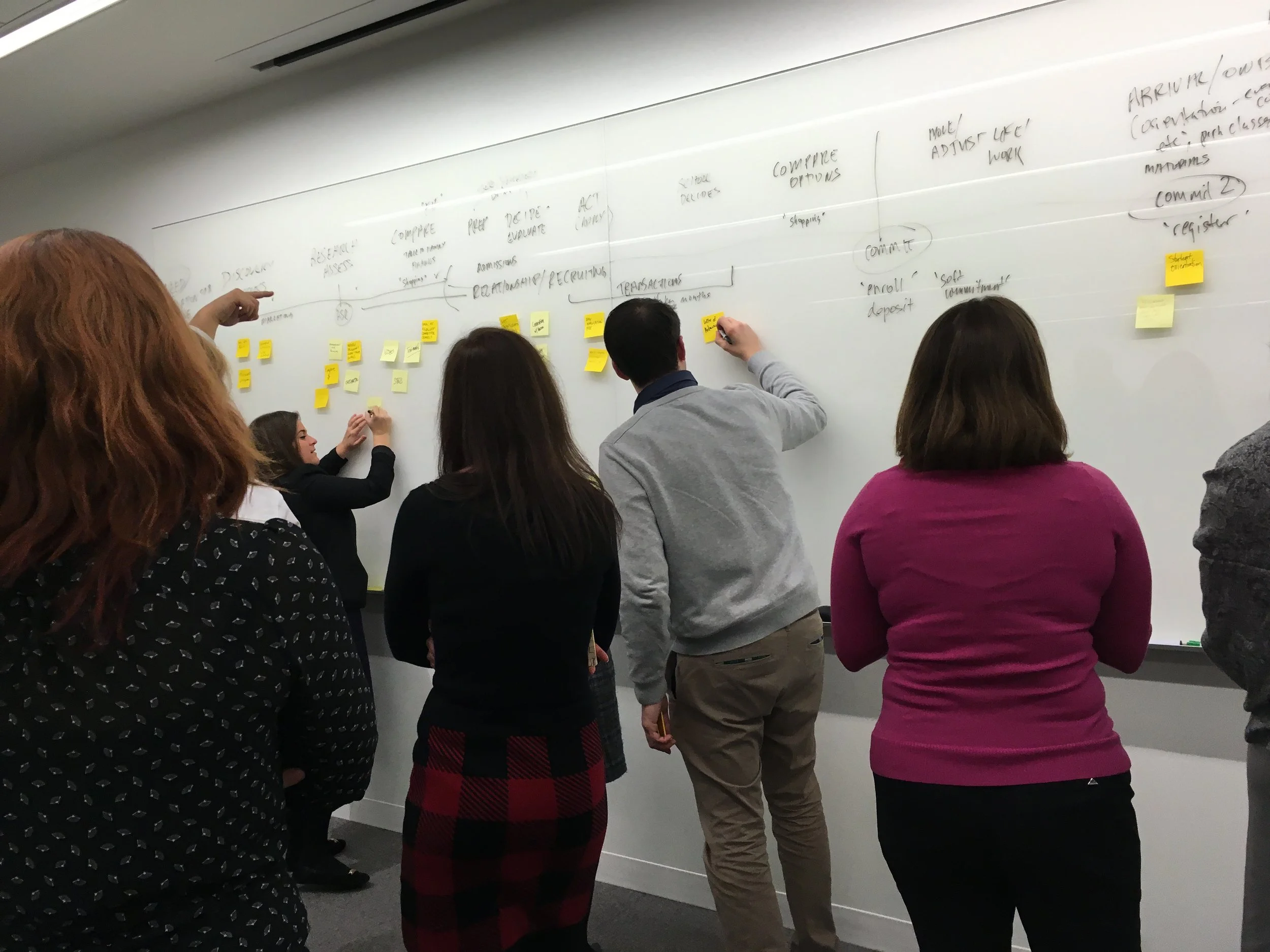
Student experience co-design session at Georgetown University
Cantina: Building Under Constraints
The work at Story+Structure was a direct reason I was recruited by Cantina, a firm mainly known for its engineering excellence. Cantina had produced genuinely groundbreaking digital products, but as the market shifted toward deep platform expertise and mobile development became commoditized, the engineering-led model faced real risks. The CEO saw this clearly and wanted a design capability that could reposition the firm. I agreed to found it.
There was no budget to hire a team. No established market for the offering. No internal precedent for the kind of work I was proposing. So the early days were scrappy by necessity, balancing internal training (exposing both the design and engineering teams to service design methods) with external credibility-building: an article for Touchpoint, the Service Design Network's journal; a set of Experience Strategy method cards; blog posts and conference appearances designed to signal to the market that something new was happening at Cantina.
I found two key allies inside the firm, the Chief Innovation Officer and a senior designer with deep experience strategy expertise, and together we sold the offering before we had the infrastructure to deliver it at scale. Our first major win was Blue Cross Blue Shield of Massachusetts, where we beat several established consultancies, including IDEO and Continuum, to lead a service design engagement that would later become the subject of a keynote at the Service Design Week conference in Chicago.

The Blue Cross Blue Shield project included service design for an in-person experience.
More projects followed—Shorelight, SES, DCU, LabCorp—each one deepening the practice and expanding what it could demonstrate. Frontstage design on some (the LabCorp patient experience), backstage and organizational design on others (SES and Shorelight). As the practice generated sufficient revenue to justify dedicated headcount, I built and led the team and was promoted to SVP.
One thing I worked hard to preserve as the practice scaled was its scrappiness. The contract structure we pioneered early on (a fixed-price core team with a budget held in reserve for implementation) reflected the reality that this kind of work has uncertain deliverables. Selling ambiguity to clients (not to mention the internal culture change this demanded), required a different kind of pitch than a development project. That tension between rigor and flexibility, between clear methodology and emergent outcomes, became part of how I taught the team to think.
Service Design at the Organizational Level
When the pandemic arrived, it clarified something quickly. As Warren Buffett once observed, you only find out who's been swimming naked when the tide goes out. For firms that had a trusted relationship with their clients, one where clients didn’t hesitate to turn to them for advice in uncertain times, the tide going out revealed strength. For those that still operated at the level of the deliverable, rather than at the level of a capability, it revealed weakness. For Cantina, the moment was both difficult and instructive. I was promoted to Chief Experience Officer and I essentially applied what I'd learned building the practice to reorganizing the firm.
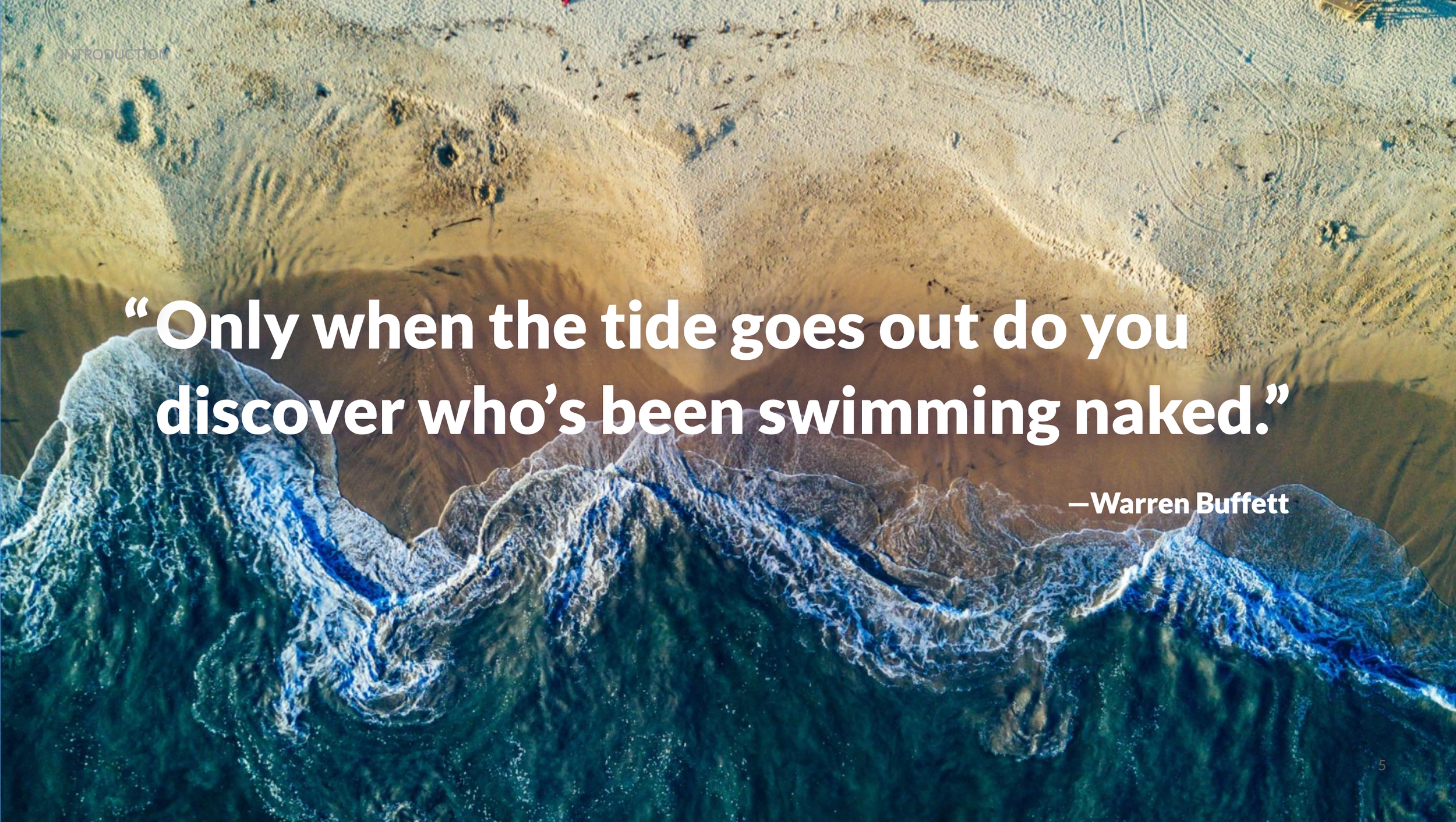
Slide from the strategic plan
This meant running an executive workshop to surface and resolve uncertainty about the business model. Redesigning the sales experience. Rethinking the brand, key messages, and market positioning to commit fully to repositioning Cantina as an innovation design firm. Establishing client experience metrics to improve retention. Creating a biannual internal conference to engage employees in change and co-creating a strategic plan with clear objectives and measures.
It was service design at the organizational level, the same methods, the same systems thinking, the same insistence on mapping what was actually happening before proposing what should change. The main difference was that the client was us.
Portfolio T: The Practice Instinct Continues
Portfolio T, spun out of Mach49, was built on a simple premise: that great venture outcomes require great design thinking from the start. My charge was to build a team that could deliver that by working alongside founders from early opportunity validation through product-market fit.
I mentored and reorganized the team, introduced regional leads, and redefined how research and design contributed to the venture process. But the more interesting work was forward-looking as the leadership began asking how AI might reshape the venture model.
On one level, my team explored where synthetic research, qualitative synthesis, and rapid prototyping could compress the path from idea to credible pitch and accelerate product iteration to find product-market fit.
On another level, I worked with the executive team to explore how AI might completely reshape the venture design and funding model. I was most excited to understand how a new approach could expand the pool of founders, people with great ideas, but who had never participated in the venture process in the first place. It seemed to me that we had an opportunity to short-circuit the traditional pitch-funder loop endemic to the Silicon Valley model, and instead, help founders, in the words of Peter Drucker, create and keep a customer (not to mention more of their equity).
The questions we were working on—how do you design a practice for a world where some of the work can be done by machines, yet where the human judgment required becomes both more valuable and more specific—are questions I'm still working on.
What I've Learned
Building a practice is a design problem. It has users (the team, the clients, the organization), a service experience (how work gets sold, delivered, and measured), and a backstage (the methodology, culture, and incentives that determine whether the frontstage holds up under pressure).
If there’s a through-line across Story+Structure, Cantina, and Portfolio T, it isn't the methods or even the outcomes, it's the conviction that design's value is most visible when it operates at the system level. It’s most relevant when it doesn't just improve an experience, but changes how an organization understands its own purpose.